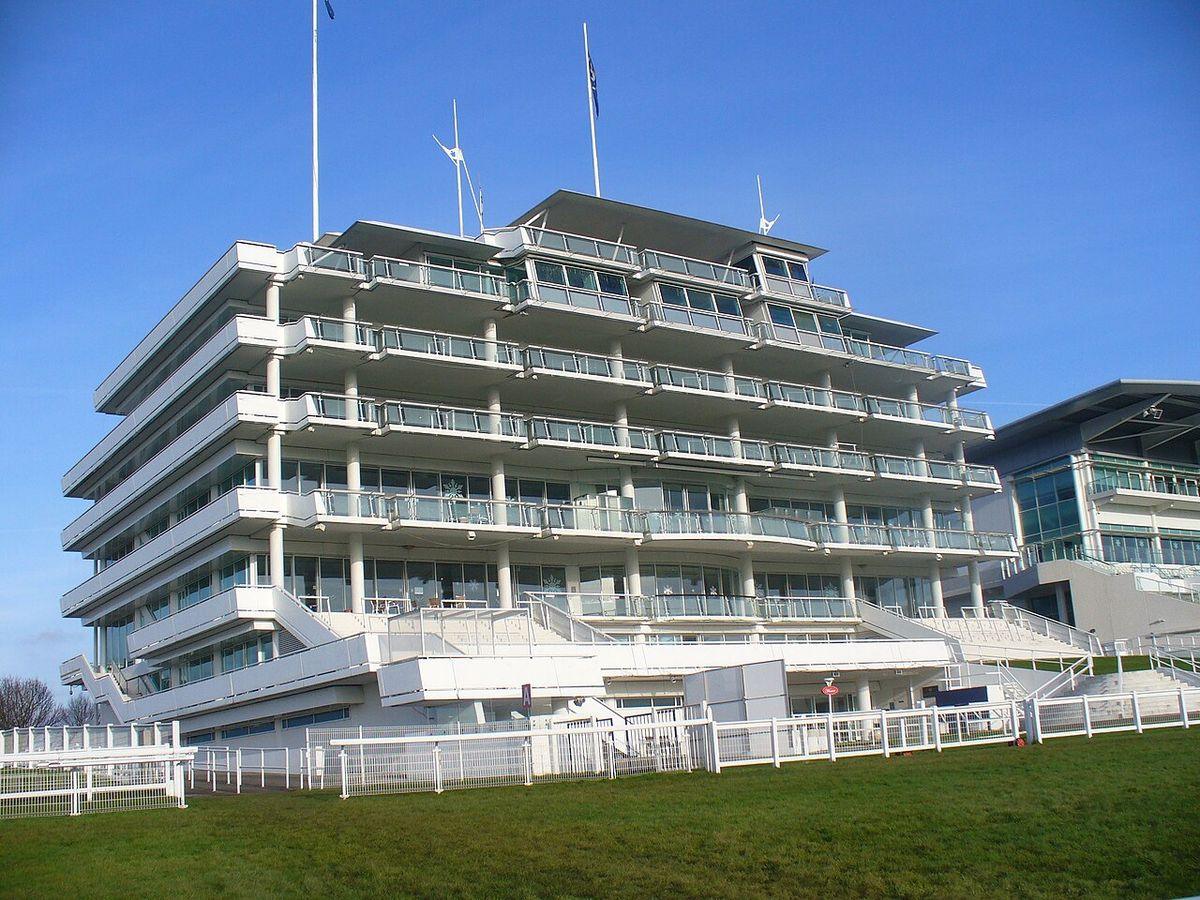
Corporate hospitality is a business paying to entertain people it wants a good relationship with, usually clients, sometimes its own staff, at events like a race meeting, a football match or a concert. The guest gets a better day than a normal ticket gives them. The business gets time with someone it wants to keep.
That’s the short version. The rest of this guide covers what the term means in law and tax, what you actually get in a package, what it costs at real venues, and the two sets of rules that catch people out.
The meaning, from the people who define it
Dictionaries don’t quite agree on who the guests are.
Cambridge calls it a company “entertaining its customers, employees, etc., for example by inviting them to big events, in order to get or keep a good relationship with them”. Staff are included.
Collins (British English) is narrower: “entertaining carried out by businesses for the benefit of their actual or potential clients”. Clients only.
HMRC doesn’t use the phrase at all. It talks about “business entertainment”, which it defines as “the provision of free or subsidised hospitality or entertainment” (BIM45010). Subsidised matters: if a guest pays something but less than it cost you, the gap still counts.
The Jockey Club, which runs Cheltenham, Aintree and Epsom, puts it in sales terms: companies entertaining clients “as a way of promoting their business”.
Our working definition sits between them. If a business pays and someone else enjoys the day, it’s corporate hospitality.
It isn’t the hospitality industry
Search for this term and Google will happily suggest hospitality jobs and bar work. That’s a different thing. The hospitality industry is hotels, restaurants and pubs. Corporate hospitality is a business buying a day out for its guests. The people serving you in a box at the races work in the first. The company that booked the box is doing the second.
What a package includes
Packages vary by venue, but most are built from the same parts. Here’s what the official venue pages list.
A private box or suite. Your own room with a view of the action. At Arsenal, an Executive Box N7+ seats 15 on the halfway line (Arsenal hospitality). Lord’s sells four named suites with padded balcony seats outside (Lord’s).
A restaurant. A table for the day, usually with a multi-course lunch. The Cheltenham Festival lists 11 restaurant packages, from a pub to a five-course à la carte room (Cheltenham).
A shared lounge or club. Better seats plus access to a bar and food area you share with other guests. Arenas lean on this model: The O2 sells lounges, club seats and shared suites as well as private ones (venue premium page).
Experiences. Some clubs sell access as much as food. Arsenal’s Touchline package puts guests behind the home bench with a view of the players arriving (Arsenal hospitality).
Drinks. Champagne receptions and complimentary bars turn up across racing and cricket packages. Read what “complimentary” covers before the day, not during it.
Hospitality, VIP tickets and premium seats
No official body defines “VIP ticket”, so sellers use it loosely. A useful test: does the package give you a hosted space (a box, a restaurant table, a lounge) or just a better seat with a perk? At Royal Ascot, for example, your enclosure badge gets you in, and restaurants and boxes are sold on top of it (Ascot). A “VIP ticket” is often the badge plus a drink. Hospitality is the table.
What it costs: real “from” prices
These are the starting prices on the official pages when we checked them on 21/11/2026. They move, and “from” usually means the cheapest fixture.
| Venue | Package | From |
|---|---|---|
| Arsenal, Emirates Stadium | The Academy | £239 per person |
| Arsenal, Emirates Stadium | The Director’s Box | £579 per person |
| Arsenal, Emirates Stadium | The Touchline | £1,899 per person |
| Arsenal, Emirates Stadium | Executive Box N7+ (15 guests) | £14,999 per box |
| Cheltenham Festival 2027 | Moscow Flyer Restaurant | £402 |
| Cheltenham Festival 2027 | Gold Cup Restaurant | £702 |
| Cheltenham Festival 2027 | Chez Roux Restaurant | £1,116 |
Arsenal’s figures are per person or per box as the club labels them. Cheltenham’s page shows “price from” without saying per person or whether VAT is included, so ask before you budget.
The gap is the story. At the same football club, a day can cost under £250 a head or close to £15,000 for a box. “Corporate hospitality” covers both.
The tax position, in one paragraph
HMRC’s starting point is blunt: “expenditure on business entertainment or gifts is not allowable as a deduction against profits” (BIM45000). That includes packages bought through an events company (BIM45060). Staff entertaining is different: it’s allowable if it’s genuinely for staff, and a separate rule lets employees enjoy an annual event without a tax bill if it’s open to all of them and costs £150 or less per person (GOV.UK). The full detail, including VAT, is in our guide to whether client entertainment is tax deductible. Check your own case with an accountant.
The Bribery Act doesn’t ban it
The Ministry of Justice guidance is clear that “bona fide hospitality” is “an established and important part of doing business” and that the Act isn’t meant to criminalise it (Bribery Act guidance). What it watches for is hospitality used to influence a decision. Writing about public officials, the guidance says that the more lavish the hospitality, the greater the inference that it’s meant to influence. It also says that matching what everyone else in your sector does isn’t proof of anything if the norm is extravagant.
Our own practical advice on top of the guidance:
- Keep it proportionate to the relationship.
- Don’t invite anyone who is mid-way through deciding on a contract with you.
- Write down who went and what it cost.
Our guide on how to entertain clients without it backfiring goes through this step by step.
Questions people ask
What is an example of a corporate hospitality event?
A company booking a restaurant table at the Cheltenham Festival for six clients is a classic example. So is a firm taking a box at a Premier League match, or a shared suite at an arena concert. The event can be anything; the point is that the business pays and the guests are there for the relationship.
Is corporate hospitality the same as hospitality?
No. “Hospitality” alone usually means the industry: hotels, restaurants, catering. Corporate hospitality is a business buying entertainment for its guests at an event.
Who usually goes?
Clients and prospective clients mostly. Staff go too, as a reward or for a team day. Dictionaries split on whether staff events count, and HMRC taxes the two differently, so it’s worth knowing which one you’re running.
Is it worth it?
There’s no recent independent UK research on return. The surveys that exist come from companies selling packages, so we don’t quote them. What we can say is that the costs range from a couple of hundred pounds a head to five figures, and the cheapest option that gives you proper time with the guest is usually the right one.
Where to start
Pick the event your guest would actually want to go to, then work back to the package. Our 2027 sporting calendar and stadium concerts list have the confirmed dates, and what’s included in a hospitality ticket covers the small print.
General information, checked against the sources named in the guide. It is not tax, legal or financial advice. Spotted something out of date? See corrections.


